Back to Basics: Firefighting with the Eisenhower Matrix
If you’re leading a school, you probably spend most of your time reacting. An upset parent, a staffing issue, an urgent compliance deadline—one thing after another, all needing your immediate attention. And no matter how much you get done, the work never seems to let up.
This isn’t just a time management issue. It’s a leadership issue. And it’s one that’s been around for a long time.
President Dwight D. Eisenhower, a man who led the Allied forces to victory in World War II before serving two terms as President of the United States, had a way of thinking about tasks that helped him stay focused on what truly mattered. He divided everything into four categories:
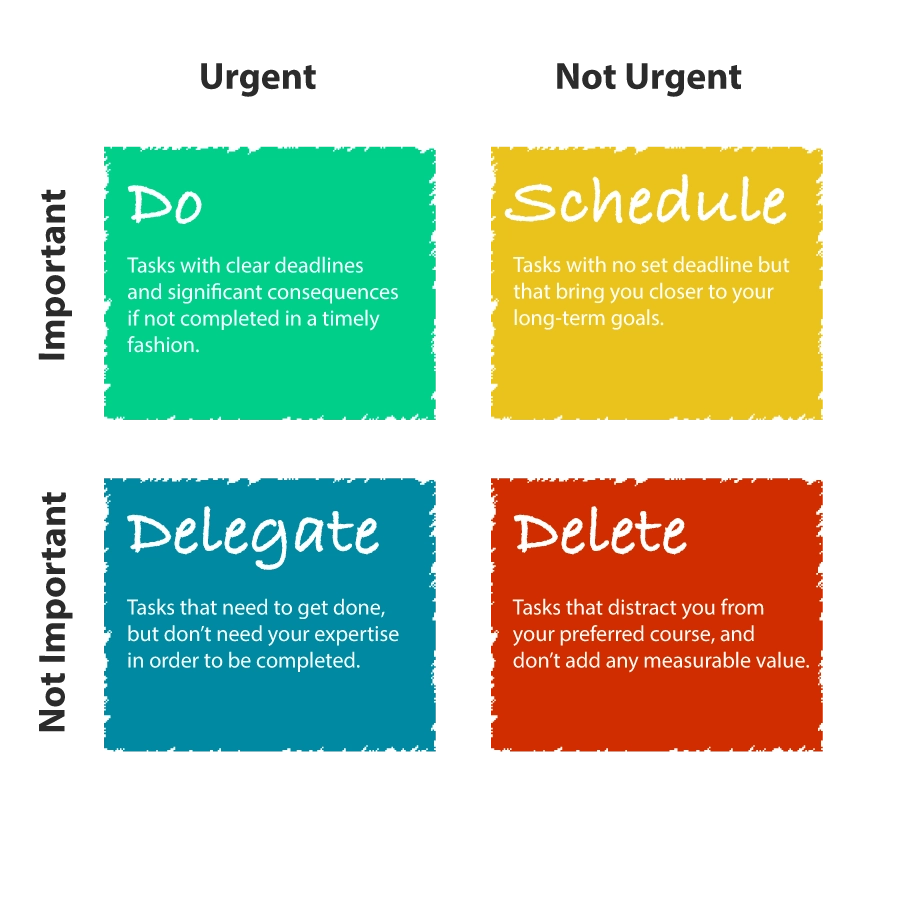
First, there are tasks that are both urgent and important. These are the things you have to handle immediately—crises, last-minute deadlines, and anything that will seriously impact your school if it’s not dealt with right away. A student safety issue, a major funding report due today, or a staff emergency all fall into this category.
Then there are tasks that are important but not urgent. These are the long-term priorities that shape the future—things like strategic planning, professional development, and strengthening school culture. They’re essential, but because they don’t demand your immediate attention, they often get pushed aside.
The third category is urgent but not important. These tasks feel pressing, but they don’t require you. Endless emails, minor logistical decisions, and meetings that could be handled by someone else all fall into this bucket.
Finally, there are tasks that are neither urgent nor important—the time-wasters. The reports that no one reads, the busywork that exists just because “we’ve always done it this way,” and the meetings that serve no real purpose.
Most school leaders spend their days bouncing between the first and third categories. They handle the emergencies (which makes sense) but then get bogged down in responding to emails, attending unnecessary meetings, and making minor decisions that could be delegated. And because of that, they never get to the second category—the long-term work that actually makes things better.
The Delegation Problem
One of the biggest reasons leaders stay stuck in reactive mode is that they don’t delegate enough. Not because they don’t trust their teams (though sometimes that’s part of it), but because it feels easier and faster to do things themselves. Answering an email takes two minutes. Approving a minor scheduling change feels like no big deal. But over time, these small tasks pile up and leave no space for big-picture leadership.
Peter Drucker, one of the most influential thinkers in management, put it simply: effective leaders focus only on what they can do, and they delegate everything else.
This isn’t just about lightening your workload. It’s about shifting your time toward the kind of leadership that makes a difference. If you’re buried in small decisions, you’re not thinking about the future of your school. If your inbox is overflowing with questions that others could answer, you’re not developing your team.
The shift starts by asking, “Is this something that only I can handle?” If the answer is no, then it needs to be delegated.
The Task Purge
Beyond delegation, the second big issue is that leaders don’t regularly eliminate unnecessary work. Schools are full of tasks that don’t serve a real purpose anymore, but they persist because no one ever stops to question them. Reports get filed because they always have been. Committees meet because they exist, not because they’re driving meaningful change.
The best way to fight this is with a regular time audit. Every few months, sit down with your calendar and your to-do list and ask yourself:
Does this task actually contribute to my school’s success?
What would happen if I stopped doing it?
Can this be simplified, automated, or eliminated?
Greg McKeown, in his book Essentialism, argues that success isn’t about doing more—it’s about doing less, but better. That’s an approach school leaders should take seriously.
The Firefighter Trap
The real irony of time management is that the more time you spend on long-term planning and leadership, the fewer emergencies you’ll have to deal with. But most school leaders are so overwhelmed by the day-to-day that they never carve out the time to prevent future problems.
This is why setting aside dedicated time for planning is so essential. Stephen Covey, in The 7 Habits of Highly Effective People, calls this “time blocking.” It means putting long-term priorities on your calendar just like you would a meeting or a deadline—because if you don’t, they’ll never happen.
Block off a couple of hours a week for deep work. Not email. Not meetings. Just strategic thinking—about your school’s future, about how to develop your staff, about what’s coming down the road that you need to prepare for now. It will feel unnatural at first, but over time, as you invest more energy into long-term leadership, you’ll see fewer and fewer fires pop up that need your immediate attention.
Reclaiming Your Time
Imagine what your school would look like if you weren’t constantly putting out fires. If you had the space to mentor your staff, connect with students, and build a long-term vision for your school. That’s what happens when you shift your focus.
It starts with three simple steps:
Delegate the tasks that don’t need your attention.
Eliminate the ones that aren’t serving your mission.
Use the time you've saved for leadership work that moves your school forward.
Most leaders don’t struggle because they aren’t working hard. They struggle because they’re busy with the wrong things. The Eisenhower Matrix isn’t just a productivity hack—it’s a way of thinking about leadership. When you make space for what really matters, everything else starts to fall into place.
References
Covey, S. R. (1989). The 7 habits of highly effective people: Powerful lessons in personal change. Free Press.
Drucker, P. F. (1999). Management challenges for the 21st century. HarperBusiness.
McKeown, G. (2014). Essentialism: The disciplined pursuit of less. Crown Business.
Morgenstern, J. (2004). Time management from the inside out. Holt Paperbacks.