Delivered by Us
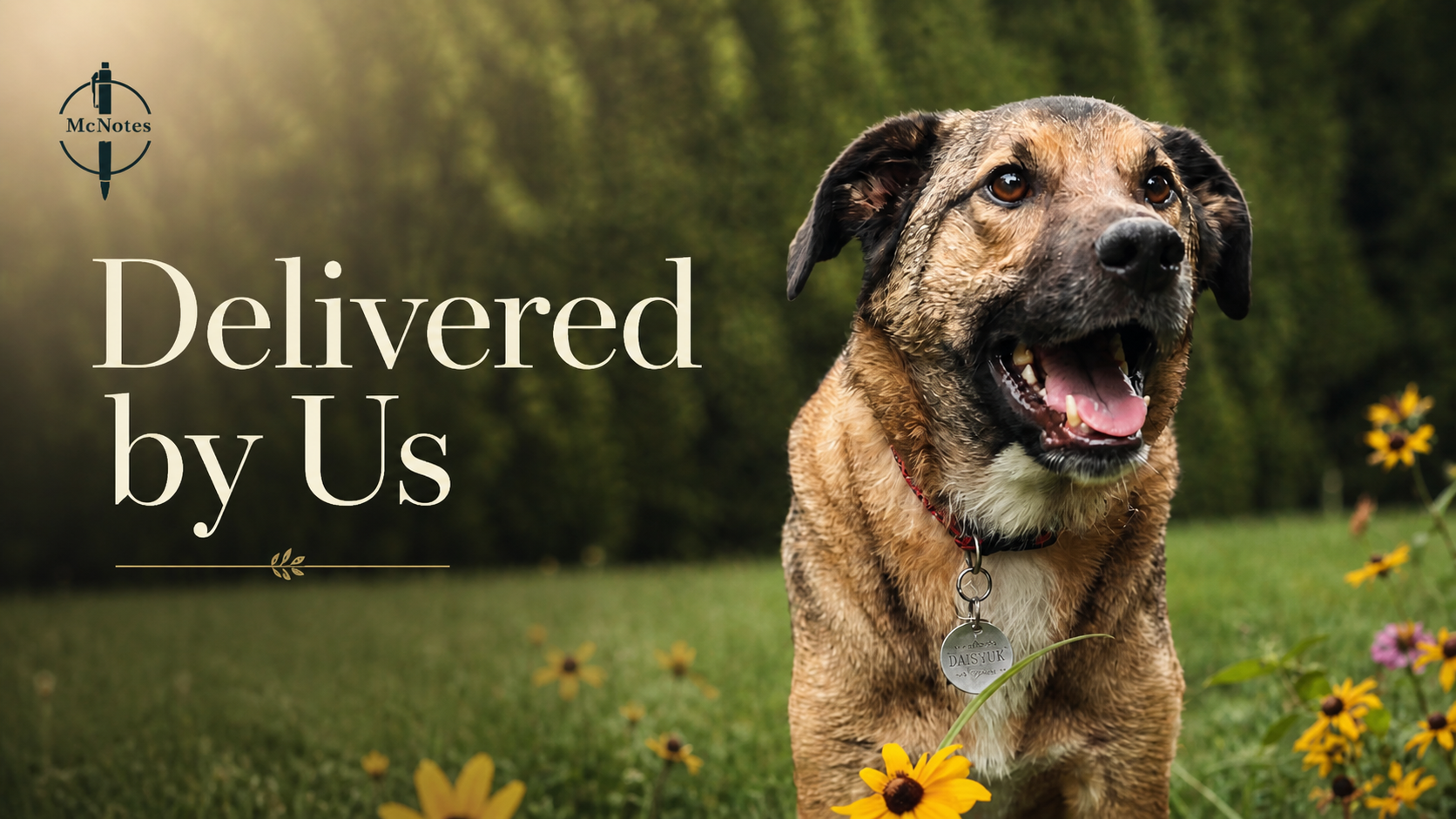
Datsyuk (2018-2026)
Yesterday morning, after I brushed my teeth, there was no dog at the edge of the bed waiting for me to carry him downstairs.
For years, that had been the first task of the day. Before coffee, before email, before whatever duties were waiting outside the bedroom door, there was Datsyuk. He would be there on the bed, sometimes alert, sometimes still half-buried in sleep, his forty-five or fifty pounds arranged in whatever improbable shape had carried him through the night. I would lift him, feel the weight of his body settle against me, and carry him down the stairs.
The stairs had become difficult for him. The wood floors downstairs were difficult too, so I would set him on the carpet under the dining table, where he could get traction. He would lie there and watch me prepare the morning’s small pharmacy. Pills folded into provolone. Canned food spooned into a bowl. Some high-value topper added according to the fashion of the week, whatever he had recently decided was worth living for. I would put the bowl in the microwave for twenty-two seconds. Any less and the food would not be warm all the way through. Any more and the edges might become hot enough to burn his mouth. When the microwave beeped, I tested the food’s temperature with the back of my finger before setting it down in front of him.
On good mornings, he ate quickly. On mornings when he did not, I knew something was wrong.
Now there was no dog to carry. No pills to hide. No bowl to warm. No large brown eyes watching me from under the dining table, waiting to see what kind of day his body might allow him to have.
The first day after a death is full of mistakes. The body continues to perform the life it knew. It worries about the stairs before remembering there is no one to fall down them. It listens for nails on the floor. It looks for a head at the edge of the bed. It expects weight, warmth, hunger, need.
This is what grief is, or part of what it is. It is not simply sadness. Sadness is too small and too clean a word. Grief is love after the body it served has gone. It is the mind and nervous system learning, in room after room, that the beloved no longer occupies the places where love still expects him.
This is especially true, I think, when we lose those who depended on us for care. There are people and animals whose presence becomes built into our lives because they held us, protected us, raised us, fed us, steadied us. There are others whose presence becomes built into us because we held them, protected them, fed them, steadied them. Pets usually belong to the second category, though anyone who has loved a dog knows the exchange is never only one directional. Datsyuk depended on us completely, and yet the rhythms by which we cared for him became one of the ways our own lives were held together.
Love trained us. It trained us in times and doses and walking routes. It trained us in the angle of his body when he was frightened, the look in his eyes when he was overmedicated, the speed with which he ate when he felt well, the places in the house where he could stand safely, the places where he could not. Then he died, and the training remained.
I am not trying to stop loving him. I am learning, against every trained impulse in my mind, that there is no longer a body here for that love to serve.
Before he became an absence in our house, he was a frightened dog in California who could not walk ten feet.
When my wife and I first moved to California, before she was my wife, we drove across the country in the span of about a week and found our way into Monterey’s cutthroat rental market through some combination of charisma, luck, and low-level con artistry. We secured a small apartment and lived there for two years. It was only after we moved into what was essentially a glorified shed, though one with a fenced-in backyard, that we began to imagine getting a dog.
California had a strange problem then, at least where we lived. There seemed to be more people who wanted dogs than dogs available to adopt. This produced two wildly different paths. One path required applications, references, interviews, home inspections, proof of moral seriousness, and perhaps, if the process had continued long enough, a notarized statement from a childhood neighbor confirming that you had once been gentle with a hamster. The other path led to places that felt improvised, underfunded, and vaguely suspicious, where the central question seemed to be whether you had brought a leash.
We chose the second path.
The shelter had an arrangement with a shelter in Russia, where the supply-and-demand problem ran in the opposite direction. There were street dogs there who needed homes. There were people in California who wanted dogs. Some mechanism existed between these two facts, and through that mechanism a terrified dog from Volgograd crossed an ocean and ended up in front of us.
We had gone to meet another dog. That seems important now. In all the long chain of contingencies, we were not even there for him. We were there for the idea of a dog, and then for a specific dog we had seen advertised, and then, suddenly, for this dog.
My wife had studied Russian and traveled to Russia for graduate study. I had grown up loving hockey and the Detroit Red Wings, a team known for drafting and building around Russian players before much of the league knew what to do with them. So, when this Russian street dog became ours, we named him after Pavel Datsyuk, the great Red Wings forward, the magician of soft hands and impossible dangles.
Naming him was the first act of belonging. This dog who had come from streets we had never seen, through shelters and paperwork and airplanes and whatever human arrangements had moved him across the world, became Datsyuk.
Whatever his life had been in Volgograd, it had not prepared him for trust. He had almost no social skills. He was the most terrified dog I had ever met. After we got him into the car and drove him home, I tried to take him on a walk. He made it about ten feet before he stopped, trembling, refusing to go farther. I held him for a while. Then we made it another ten feet. Then I held him again.
Rescue, from his point of view, may have looked like another kidnapping. A car. A new place. New people. A leash. A sidewalk in a country where the air itself must have smelled wrong. We thought we had saved him. He could not yet have known that.
That first walk taught us the terms. He would go only as far as fear allowed, and love would have to wait with him there.
For weeks we worked on walking every day. Ten feet became twenty. Twenty became a block. Eventually he came to love walks, though each new home required him to relearn the map of safety. California, then New Jersey, then Philadelphia. Every neighborhood had its own dangers, its own corners, its own dogs behind fences, its own sounds that could not yet be trusted. He never became comfortable encountering other dogs, so we learned to avoid them. We crossed streets. We turned around. We scanned blocks ahead. We managed the world so that he could bear it.
Halloween was especially difficult. He had a peculiar fear of decorations, which meant that in October, if we lived near particularly festive neighbors, walks became a seasonal gauntlet of inflatable ghosts, plastic skeletons, suspicious pumpkins, and other objects whose intentions he could not verify.
Love did not cure his fear. It learned the streets fear could tolerate.
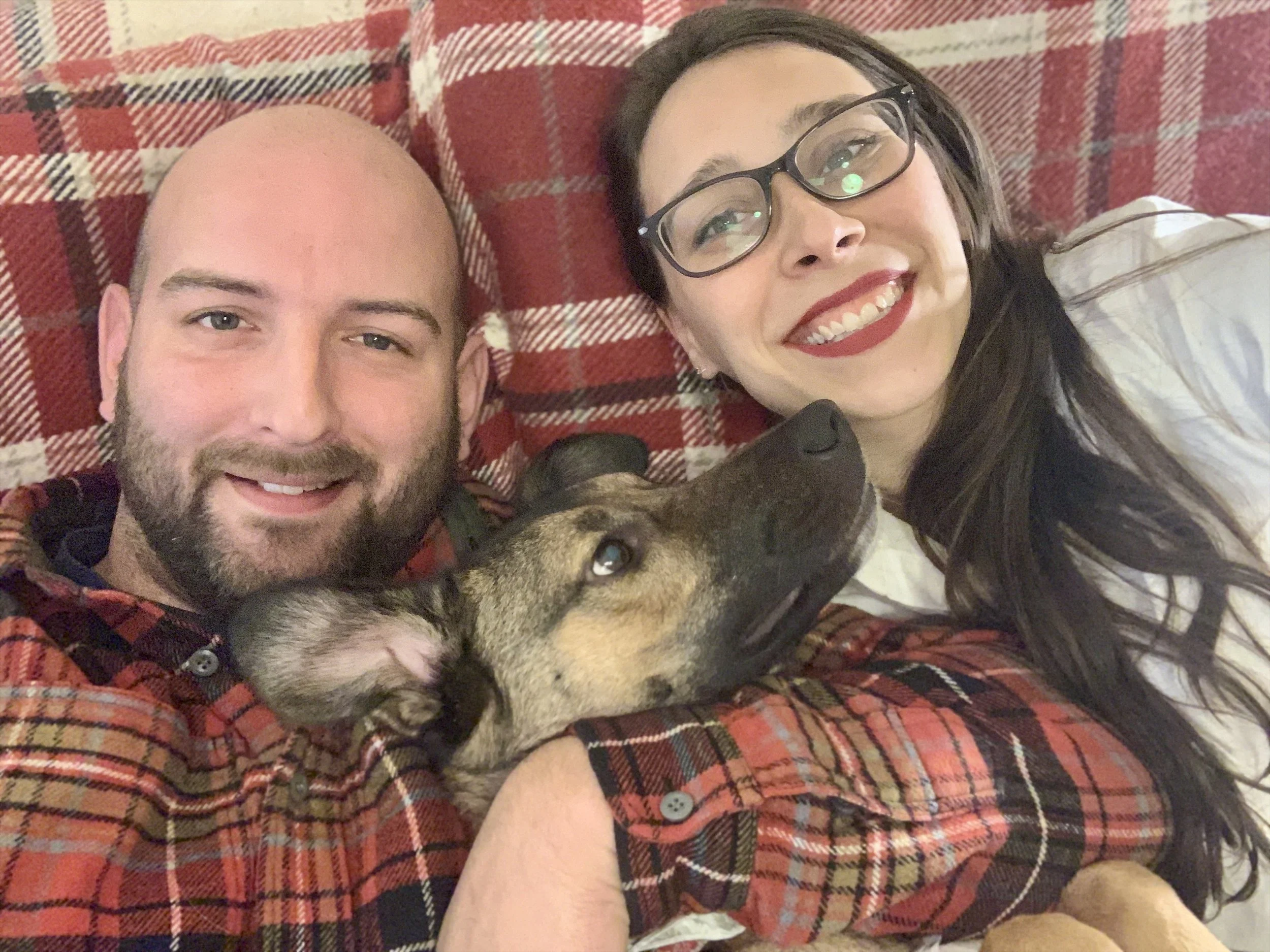
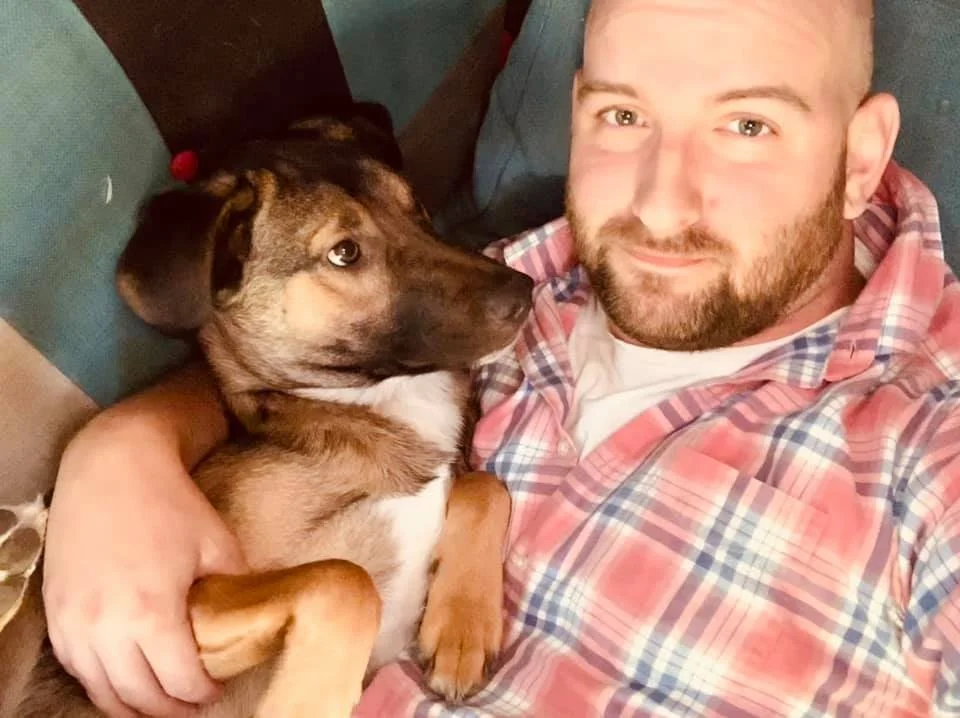
The dog who could not walk ten feet into the unknown eventually slept between us every night of the rest of his life with us. He would press his full body against one of us or the other, then roll onto his back with all four feet in the air. There was such vulnerability in that posture that it still feels like a kind of miracle. This was a dog who had begun with terror, and somehow he came to sleep belly-up between two people, wholly exposed, wholly at home.
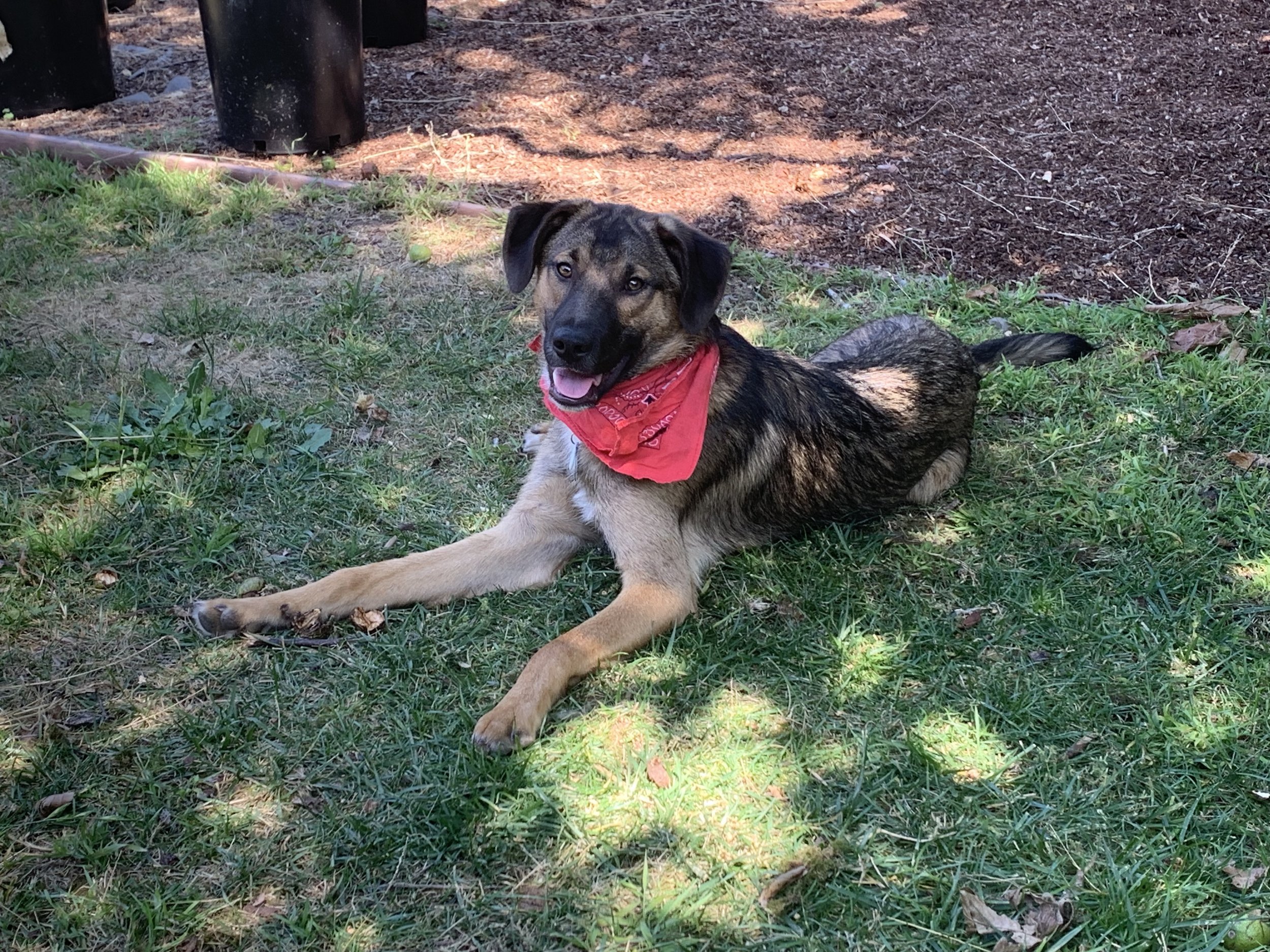
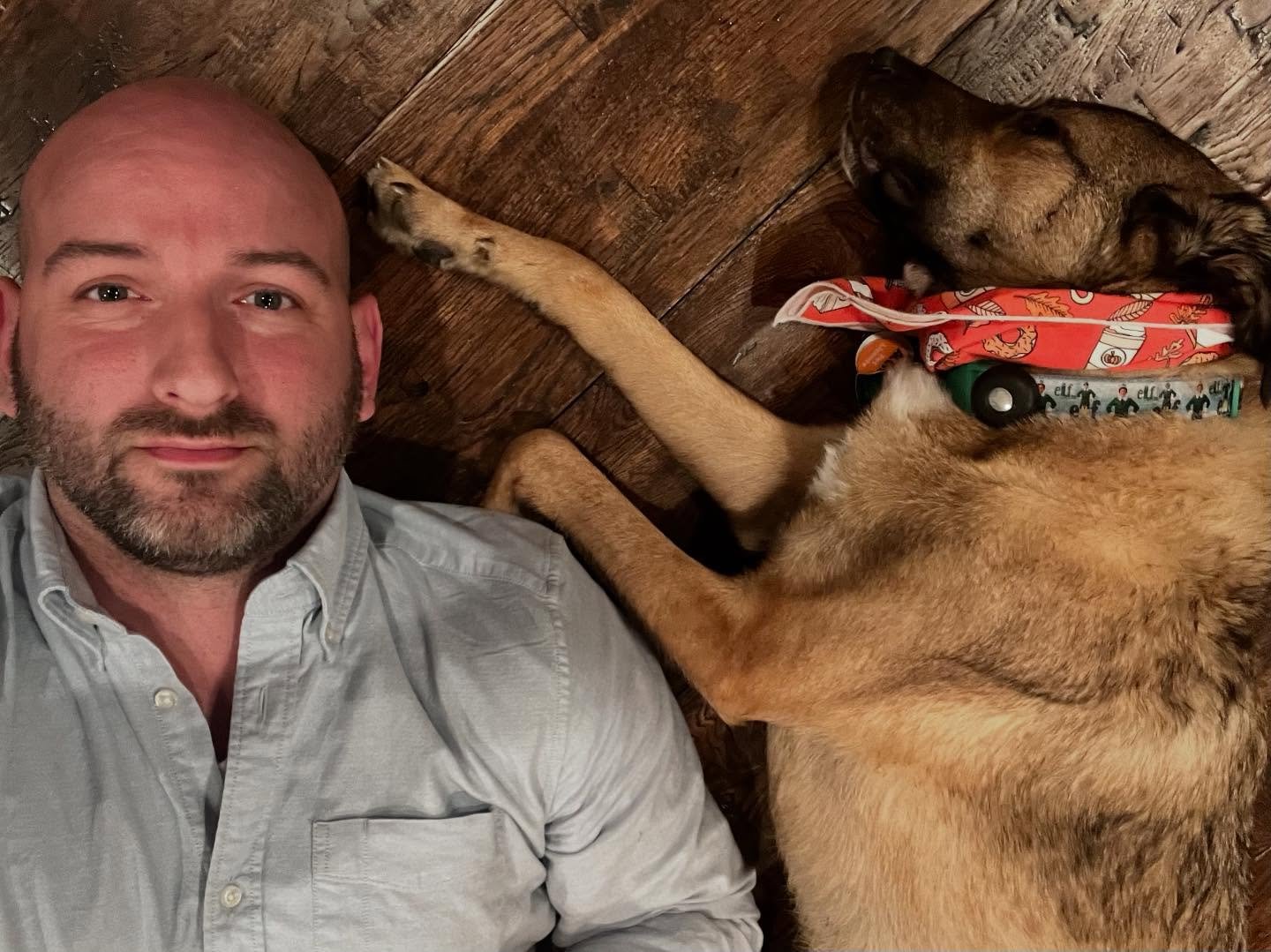
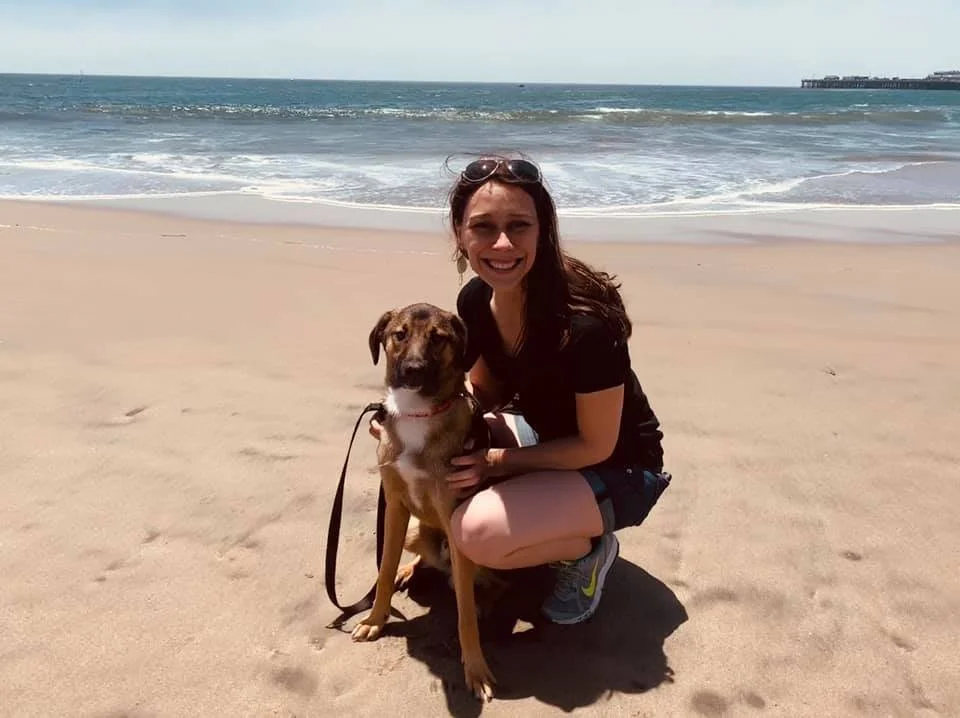
He was midsized, about forty-five to fifty pounds, tan and brindled, with a darker muzzle and darker ears, a white patch on his chest, soft brown eyes, and floppy ears that made him look younger than his history should have allowed. In one of my favorite photos of him, the one I keep as my phone’s lock screen, he stands in green grass among yellow flowers, mouth open, eyes bright, looking upward. He looks alert and almost boyish. He does not look like a dog who spent years on anticonvulsants. He does not look like a dog whose body carried a hidden electrical storm. He looks simply alive. And he was.
He was not only frightened, and he was not only sick.
He had enemies. Raccoons, specifically. He encountered them three times, once in the street, once in a backyard, and once on our Philadelphia balcony. Each time, he regarded them less as animals than as members of some ancient rival clan. He loved squirrels and birds on walks. In New Jersey, he maintained an ongoing relationship with a rabbit who came into our yard to eat the grass, a relationship that took the form of pursuit, evasion, mutual vigilance, and, thankfully, failure.
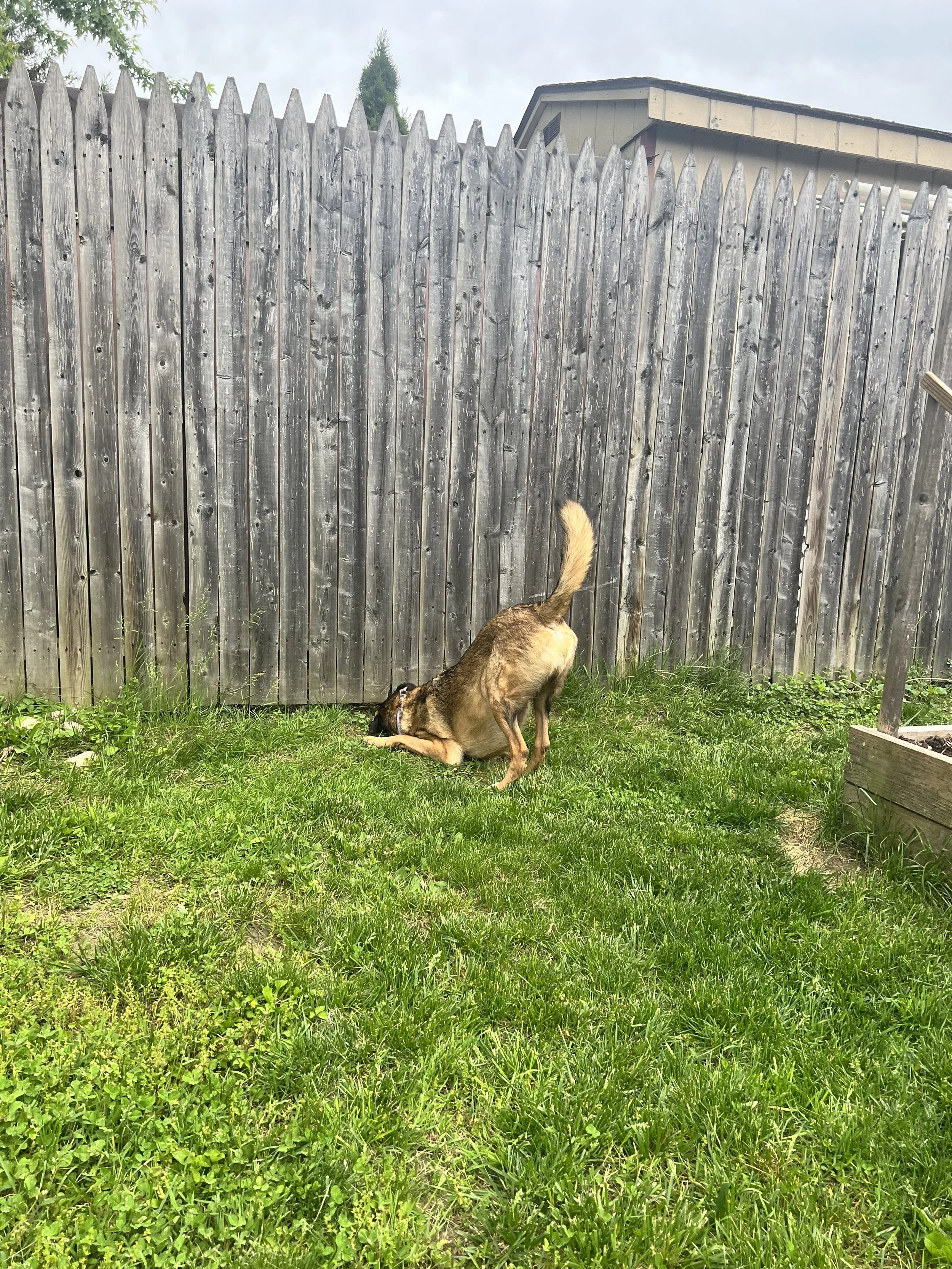
He also loved holes. For a dog so afraid of so much, he was fearless before any gap in the world. Holes under fences, spaces beneath stairs, dark openings he could not possibly understand. For a stretch, his favorite chew was a green rubber ball we called, with no imaginative flourish, Green Ball. Months after it disappeared, he became fixated on our front steps, sniffing around them, trying to get underneath. We assumed some creature had made a home there and kept him away. Eventually we relented and looked. There, waiting under the steps, was Green Ball.
Despite the clumsiness his medications sometimes laid over him, he was astonishingly athletic. He could run with sudden speed and jump higher than seemed reasonable for a dog built like him. When we had a backyard, he loved to chase a ball. Once, he escaped by leaping over a five-foot wooden fence, a feat that became impressive only after the panic ended.
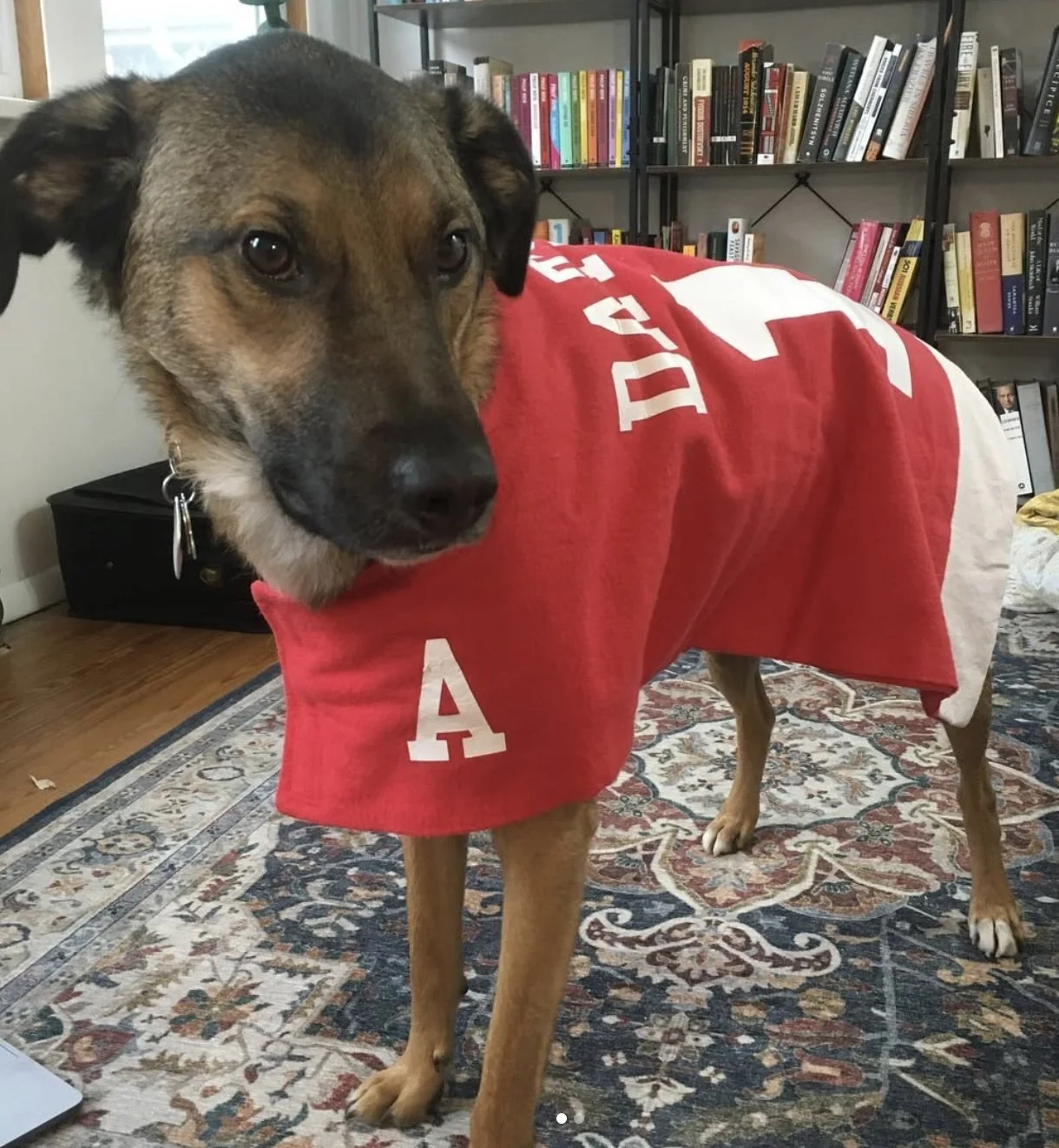
My wife made him a hockey sweater with his name and number on it, complete with an “A” for assistant captain. On cold walks, he wore it like a veteran called back for one more shift. She also found him bandanas for every season and occasion; holiday patterns, local references, small bursts of style tied lovingly around his neck. He was rarely without one. Even at his most uncertain, he had flair.
He loved lying in the sun. A deck, a balcony, a yard, any warm patch would do. He would ask to be let out and then lie on his side, soaking in the heat as if the sun had been placed there for him personally. He loved squeaky toys and greeted a new one with the pure, unembarrassed joy of a creature who still believed delight was possible.
After the pandemic, my wife was never forced back into in-person work, and Datsyuk became her daily companion in a way I could only partly witness. He lay at her feet while she worked, keeping the hours with her. Sometimes he vocalized his grief over the indignity of her needing to speak with other beings through a computer screen. In time he became known to coworkers and clients, who periodically asked for updates on him, as if he were not merely a dog appearing in the background but a small, essential member of the office.
Six months after we adopted him, the life we thought we were building with him changed again.
He had his first seizure.
We did not know what was happening. If I had been inclined toward that kind of thinking, I might have thought he was possessed and in need of an exorcism. That is what it looked like, some violent force passing through the body of the dog we loved while he himself seemed unreachable inside it.
That seizure began the second story of his life with us. The first had been the story of fear slowly becoming trust. The second was the story of a body that could not be trusted, and the people who spent the next seven years trying to protect him from it.
There were tests and hypotheses and diagnoses ruled in and out until the word became epilepsy. Then came the long trial of medications, doses, blood levels, side effects, new veterinarians, new neurologists, new emergency plans. The great danger was that he developed cluster seizures, three or more in a few hours. If those were not interrupted, they could build toward catastrophe. He might seize and fail to come out of it. The seizure could become the place where he died.
For a long time, this meant frantic drives to emergency vets wherever we happened to be living. Sometimes in the middle of the night. Sometimes in the middle of a workday. Always with the sense that time mattered and that we were racing some invisible process inside his skull.
Eventually, a cocktail of powerful drugs brought the seizures partly under control. He might have one every couple of months, and even those became less intense. But a second fear entered in place of the first. His blood levels of these medications could change because of diet, hydration, eating habits, drinking habits, or causes no one could identify. Sometimes he became so sedated that walking became difficult. His hind legs weakened. He fell down. He could not get back up. And always there was the long-term risk to his liver.
The drugs gave him years, but the drugs carried a cost his body would one day be unable to pay.
Every move made the medical life begin again. When we left California and returned east, first to New Jersey and then to Philadelphia, we drove the whole way because we were afraid to put him in the cargo hold of a plane. If he had a seizure during the flight, we would not be able to help him. So, he came across the country with us in the car, riding in the back seat with his head on the console between us, looking up through the windshield at the sky.
Even in the car, he found the place between us.
At each new home there were new vets, new neurologists, new explanations. My wife carried most of that burden. She managed the complicated army of providers and appointments and medications. She tracked the pills, the bloodwork, the refills, the histories that had to be told and retold. She also kept a meticulous log of his seizures across the years. Date, time, duration, circumstances, aftermath. The final count was 166. She did not only keep him alive. She gave shape to his belonging. She made the sweater, found the bandanas, managed the doctors, knew the refills, took the calls, and finally held him when he died.
These are the things the mind does not know how to stop doing just because the dog has died.
Proust writes in Swann’s Way that there is “much to be said for the Celtic belief that the souls of those we have lost are held captive in some inferior being, in an animal, in a plant, in some inanimate object,” and lost to us until we happen to pass by the tree or obtain the object that forms their prison. Then, he writes, “they start and tremble, they call us by our name, and as soon as we have recognized them the spell is broken. Delivered by us, they have overcome death and return to share our life.”
I do not know that I believe this literally. But in the first days after Datsyuk’s death, I understand it more than I want to. The dead return through matter. Through a bed in a closet. Through a leash. Through a package of provolone in the fridge. Through the microwave’s latch clicking open. Through the metal tongs hanging from the side of the grill.
Proust continues that the past is hidden beyond the reach of intellect, in some material object and in the sensation that object will give us. This seems right to me. I cannot think my way back to Datsyuk. I cannot summon him by force of memory. But an object can release him before I have prepared myself. The mind says he is gone. The house keeps calling him back.
This is also what researchers and writers on grief have described in other terms. Mary-Frances O’Connor has written about grief as a form of learning, the brain slowly updating its prediction that the beloved should be available in the world. Thomas Attig called grief a relearning of the world. Both descriptions feel accurate to me, though they sound too orderly for the lived experience. The learning does not happen once. It happens at the stairs. At the bowl. At the door. At the hour when the pills would have been due. On the first walk home from a favorite bar, when the familiar anticipation that you will soon be greeted by unconditional love withers into the sorrow of remembering that you will not.
The mind does not simply receive the fact of death and adjust. It learns death by encountering the world without the one it expected to find there.
A few years ago, someone gave us a dog DNA test kit. We had never seriously considered testing him. We assumed he was some kind of mutt, though who knew what that meant for a dog from Russia. Eventually we swabbed him, mailed the sample, and waited.
When the results arrived through an online portal, there was a great deal of genetic information I did not understand, including a score for something called “wolfiness,” which was high. But the breed result was the part that stopped us.
Eastern European Village Dog.
At first this seemed almost comically unhelpful. That might as well have just said “Dog”. We contacted the company and learned that the answer was not a shrug. It was stranger and older than we had expected.
Most dogs people call mutts are mixtures of breeds, sometimes many breeds, developed by human beings for certain purposes. Herding. Hunting. Guarding. Retrieving. Companionship. Datsyuk was not a mutt in that ordinary American sense. He descended from free-breeding dog populations that had lived near human settlements outside the modern system of deliberate breed creation. Village dogs are older than breeds. They belong to the long, informal arrangement between settlement and animal, fear and food, distance and trust.
I became careful, after learning this, not to romanticize him into something he was not. He was not a wolf. He was not wild. He was a dog who loved warm canned food, provolone cheese, our bed, our bodies, squeaky toys, sunlight, and licking the tongs after I grilled burgers. But knowing what he was changed the way I imagined him. His watchfulness, his caution, his need to map a neighborhood before trusting it, his permanent suspicion of other dogs, his conviction that raccoons were ancestral enemies, all of it seemed connected to something older than his own trauma. Some of it may have been an epigenetic inheritance, the intelligence of a creature whose ancestors survived by reading clues from the edges of human life.
That made his trust more moving to me. He came from dogs who had lived near human beings for thousands of years. He became a dog who lived with us, who slept between us, who let us carry him, who placed his frightened body in our hands.
If dogs have been with us that long, then so has the grief of losing them.
We are not the first people to be undone by a dog. In the ancient world, people buried dogs with words that still feel painfully recognizable. One Roman epitaph for a dog named Patricus begins, “My eyes were wet with tears, our little dog, when I bore thee to the grave,” and then turns to the ordinary intimacies death has ended: “never again shall thou give me a thousand kisses. Never canst thou be contentedly in my lap.” It closes with a cry that requires no historical translation: “What a loved companion have we lost!”
What moves me is not only that the ancients grieved their dogs. It is that they grieved them through the same bodily facts by which we grieve them now. Carrying. Kisses. The lap. The creature whose contentment was once near enough to touch. Their grief was made of expectation too.
The dog is always painfully particular, but the grief is ancient.
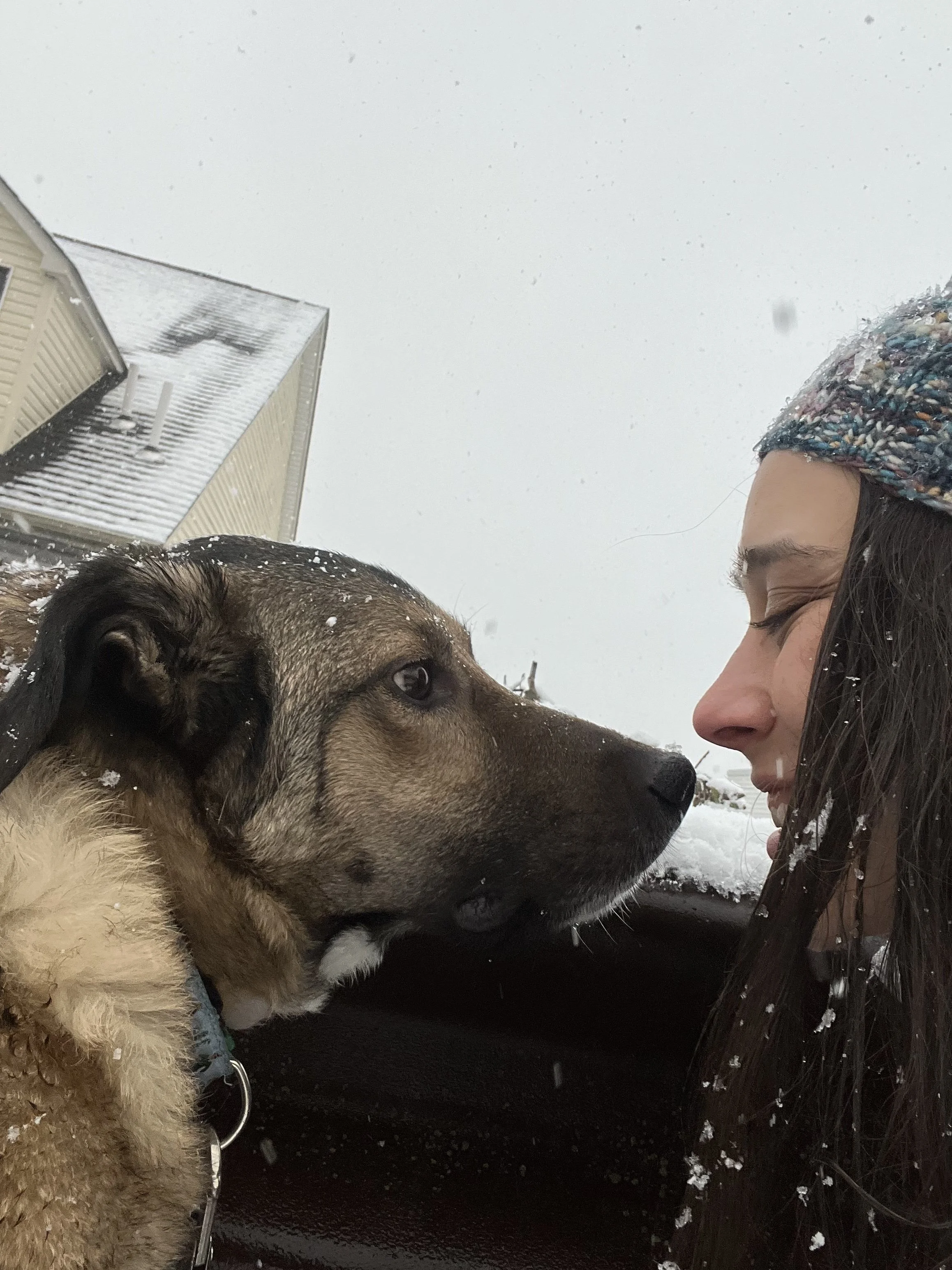
In Lincoln in the Bardo, George Saunders imagines Lincoln, in the depths of his grief for his son, coming to understand that his sorrow is “not uniquely his,” that its like has been felt “in all times, in every time.” I find that comforting, though not consoling. It does not lessen the loss. Datsyuk was ours in ways no other person can know. No one else knew the exact weight of him on the stairs, or the way his head rested on the car console, or the soulfulness of his eyes looking back at you from the pillow, saying one final goodnight, nose to nose. But the experience of loving a creature, caring for him, building a life around his needs, and then finding the world emptied of him, belongs to a bond far older than we are. It brings us into communion with all of humanity, living, dead, and yet to come.
In the end, against the odds, Datsyuk lived to about seven and a half.
The medications that controlled his seizures finally caught up with him. His liver could no longer process what had been required to keep him alive. A week before his death, he became so sedated that he could barely stand. For four days, I carried him everywhere he needed to go. When he was not moving, he lay on me.
Then the sign appeared that we had been dreading. His belly began to expand. A trip to the vet confirmed our fear. His liver was failing, and fluid was building up in his abdomen. For the moment, he was uncomfortable. Soon he would be in pain. Eventually, the fluid would make it difficult for him to breathe. We were told that we had done all we could. Euthanasia was the compassionate path.
We had spent years trying to prevent one catastrophe, and in the end, another arrived by way of the treatment that had saved him.
The bittersweet part of that final week was that, after we took him off the medications, the sedation lifted. He became astonishingly alert. In some ways, he seemed better than he had in months. More present. More himself. It would have been easy, if we had wanted to lie to ourselves, to say that perhaps we had been wrong.
But he was not better. He was dying of liver failure. Without the medication, the seizures would return. With the medication, his liver could not continue. There was no safe place left between the two dangers.
The night before we put him down, my wife and I took him on a walk through the evening streets of our neighborhood in Philadelphia. We decided that he could go anywhere he wanted, at his pace, for as long as he wanted. For once, there was no route to manage, no schedule, no need to hurry. There was only his wanting and our following.
He took full advantage of it.
I keep returning to that walk because it was such a simple mercy. After all the years of managing his fear, managing his body, managing his medications, managing the risk of other dogs, managing stairs and floors and food and seizures and blood levels, we let him lead. The frightened dog from Volgograd, who once could not walk ten feet into the unknown, chose his way through the neighborhood on his final night.
The next morning, before we took him in, we gave him a last meal that did not belong to any medical plan. Hard-boiled eggs. Toast. And at the very end, part of a chocolate cookie, just so he could know, one time, what he had been denied all his life. There are rules love keeps in order to protect the body. There are also, at the end, small permissions love gives because the body is already leaving. He died peacefully at the vet in my wife’s lap.
In the few days since, the house has begun teaching us the facts of him. His bed is still in the closet, where he loved to rest his head. Last night, when I opened a snack downstairs, my first thought was fear that he might try to come down the stairs on his own, as he often did, and stumble or fall. Then I remembered. This morning, I stepped onto the balcony and looked down at the grill. The metal tongs were hanging from the side, and I thought of him walking over after I had cooked burgers, eager to lick them. I also thought of the raccoon he once encountered on that same balcony, the enemy appearing impossibly in his own airspace. When I brushed my teeth, there was no dog at the edge of the bed. No one needed to be carried. No pills had to be wrapped. No breakfast had to be warmed. No walk had to be taken.
My wife’s workday has changed too. No body at her feet. No sigh or groan over the insult of the computer screen. No small interruptions from the creature who made himself part of her daily labor simply by being there. Somewhere, sooner or later, a coworker or client will ask about him, and she will have to say the sentence again.
There is also the closet full of squeaky toys. He loved toys that squeaked and was thrilled whenever a new one appeared. We have an entire closet full of them now, including some we never got around to giving him. That is one of grief’s cruelties; not only what is gone, but what was saved for a later day that never came.
These are only the first connections. The daily ones. Later will come the weekly ones, the seasonal ones, the hidden ones. The first holiday without him. The first warm day when some part of me expects to see him lying in the sun. The first Halloween when we do not have to plan a route around plastic skeletons. The first time we find one of his bandanas tucked away somewhere. The first time I see his hockey sweater. The first time an object calls him back before I am ready.
There is a Jewish custom, in many communities, of waiting months before the unveiling of a headstone, often until near the end of the first year. I have always found that wise. A year gives mourners one full turn through the calendar. One full cycle of absences. The first winter. The first spring. The first holiday. The first ordinary seasonal recurrence. The daily expectations are struck first. Then the monthly ones. Then the annual ones. Then the ones so obscure we do not know they are there until we touch them, and the spell is broken. A leash. A bowl. A sweater. A toy. A microwave. A patch of grass. A tree. Some material object holding his soul temporarily captive, until he is again delivered by us.
There is another way to tell his story.
A dog was born somewhere in or near Volgograd, into whatever hard economy governs the lives of street dogs. Somehow, he survived. Somehow, he reached a shelter. Somehow, he was chosen for the improbable passage to California. Somehow, we went to meet another dog and came home with him.
He learned to walk, which is to say he learned, ten feet at a time, that the world would not always hurt him. He slept between us with his belly exposed, all four feet in the air, the old street-dog terror gone quiet in the warmth of our bodies. He crossed America in the back seat, his head resting on the console between us, watching the sky loosen and gather through the windshield. He swam in the Pacific. He lay in the sun as if its warmth were his oldest inheritance. He was carried when he could no longer trust his legs. He was guarded, followed, worried over, and loved down to the smallest measure.
He came so far.
Now he is gone, and we are only beginning to learn the places where he used to be.