We are only two days out from an election that became a blue tsunami across much of the country. There will be months of analysis about what happened and why. But one outcome strikes me as especially promising for our country and our culture. As someone who runs a K–8 school, and who has spent several years worrying about the messages boys receive about becoming men, I keep returning to the same finding. Young men moved sharply away from the politics that had so confidently claimed them.
According to preliminary analysis from Tufts University’s CIRCLE, 59 percent of men ages 18 to 29 voted for Democratic House candidates. In 2024, 56 percent of young men supported Donald Trump, while just 42 percent supported Kamala Harris. Democratic support among young men rose 17 percentage points in just two years.
Those figures combine different electorates and different kinds of elections. They cannot tell us how many individual men switched sides, much less what each intended by his vote. But they do challenge a cultural story that had begun to sound inevitable. Young men supposedly belonged to the politics of grievance and would increasingly embrace its vision of manhood.
I have worried about that story every time I think about the Andrew Tates and Nick Fuenteses of the world finding an audience among boys who are still discovering who they are. Boys need confidence, friendship, responsibility, and a sense that their lives will matter. They deserve adults who take those needs seriously. Instead, too many encounter men who teach them to locate their worth in someone else’s degradation.
The Trump administration has brought a version of that lesson into the highest offices in the country. It has promoted a toxic vision of masculinity in which domination confers dignity, compassion invites contempt, and cruelty demonstrates strength. Its heroes are men who can humiliate others without shame and exercise power without appearing troubled by its human cost.
Pete Hegseth has become one of this vision’s most aggressive evangelists. Before his nomination, he opposed women serving in combat roles. In his September 2025 address to military leaders, he mocked “fat generals” and “dudes in dresses,” and announced a review of the military’s definitions of bullying, hazing, and toxic leadership. He expressly disavowed abusive conduct, but his rhetoric cast protections against abuse as obstacles to the exercise of masculine authority.
His treatment of lethal force makes the cultural message uglier still. As his department faced scrutiny over deadly strikes on suspected drug boats, Hegseth shared a mock children’s book cover showing Franklin the Turtle firing a weapon at boats. He captioned it “For your Christmas wish list.” A character familiar to children through stories about friendship and growing up had been recruited into a joke about killing people, without due process.
A school leader should not have to explain why that is morally grotesque. Taking human life carries a terrible responsibility, even when force is justified. A man entrusted with that power should possess the judgment to understand its gravity. Making death into a meme is an exhibition of moral callousness, dressed up as masculine confidence.
The president offers his own lessons. When Donald Trump told a female reporter, “Quiet, piggy,” he answered scrutiny by degrading the woman asking the question. His press secretary defended the insult as evidence of his frankness. The humiliation was publicly recast as a leadership virtue. JD Vance’s ridicule of “childless cat ladies” belongs to the same repertoire of putting women in their place.
The White House extended that sensibility to its official presentation of deportations. It posted an ASMR video featuring handcuffs, chains, and people boarding a deportation flight. ASMR is a format associated with pleasurable or soothing sensory experiences. The government invited viewers to enjoy the sounds of human beings being shackled. Whatever one’s position on immigration enforcement, that choice reveals an appetite for cruelty. The detention and removal of people became material for an audience’s gratification.
Elon Musk supplied a blunt formulation when he declared, “The fundamental weakness of Western civilization is empathy.” He qualified his statement by saying he believed in caring for others and was warning against the exploitation of compassion. Yet the suspicion remains. Another person’s suffering may be manipulating you. Your impulse to care may be a defect.
This is the toxic education in manhood that concerns me. It teaches boys to deaden their consciences and call it toughness. It offers them permission to enjoy the degradation of people with less power, then congratulates them for refusing to be sentimental.
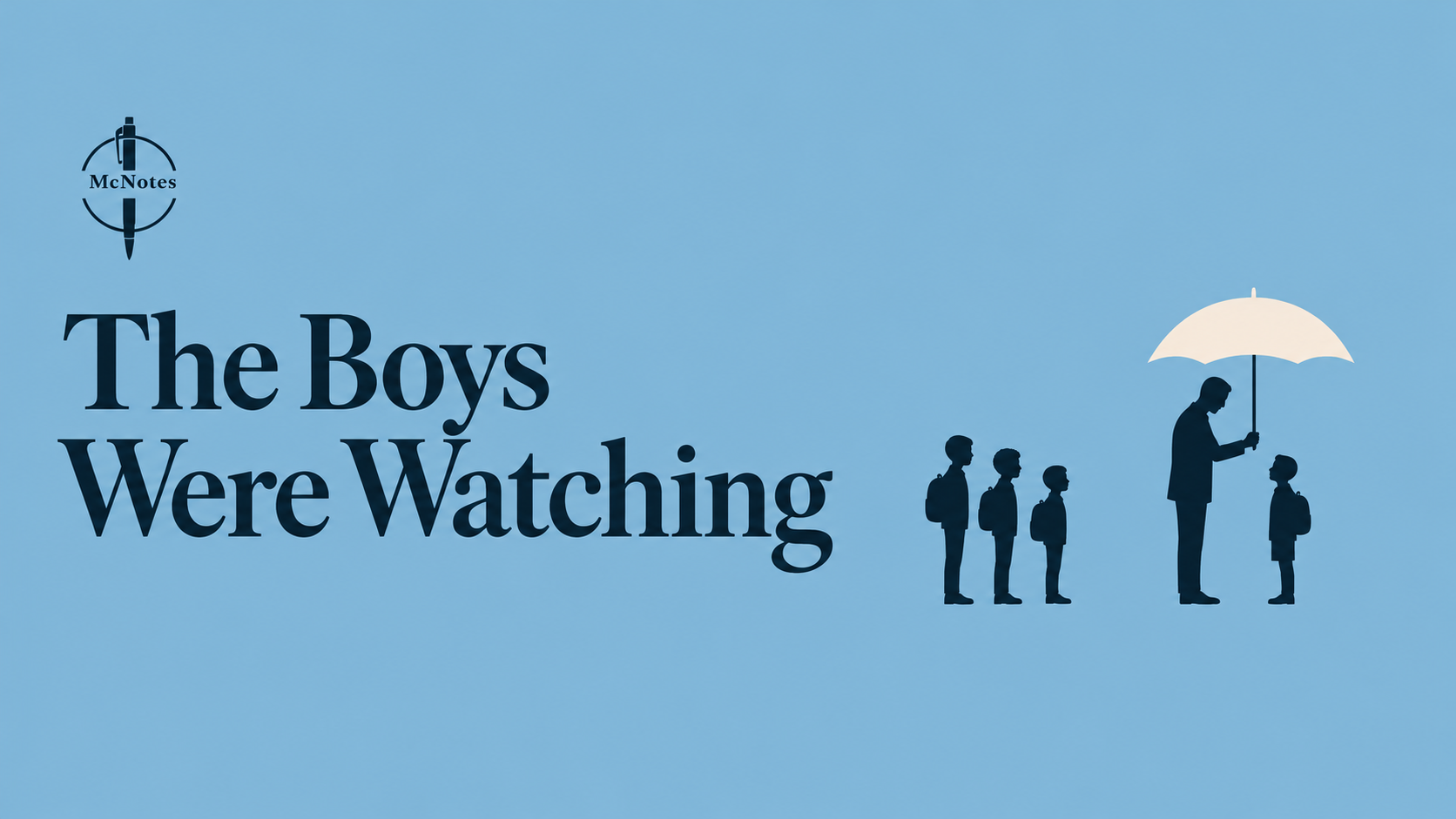
The boys in our schools are watching. They notice when adults reward a man for behavior we would correct in a child.
That is why I find hope in this week’s results. The administration presented its offer, and a majority of the young men voting for the House chose the opposition. America's young men looked up and said, no. That is not who we are, and it is not who we want to be. We should resist assigning them a single motive. We should also stop treating their allegiance to this administration's vision as a foregone conclusion.
Their voting shift contributed to an election that entrusted leadership to people long excluded from it. Georgia elected Keisha Lance Bottoms, the country’s first Black woman elected governor. Texas chose Gina Hinojosa, its first Latina governor. New Mexico elected Deb Haaland, the first Native American woman elected governor, while Minnesota sent Peggy Flanagan to the Senate and Michigan elected Abdul El-Sayed, that chamber’s first Muslim American member. And Iowa elected Josh Turek, a state legislator and two-time Paralympic basketball gold medalist who has spina bifida and uses a wheelchair.
These victories do not tell us how young men voted in each race. They do show an electorate recognizing leadership across a wider range of American lives. Turek’s achievement, in particular, offers boys something worth contemplating about perseverance, public service, and the many forms strength can take.
We now have a responsibility to make a better vision of manhood available to them.
I would like protecting and providing to be central to that vision. Boys should grow up wanting to become men on whom others can depend. Men who will stand between someone vulnerable and someone seeking to hurt them, who will work to meet their families’ needs, and who will contribute to the wellbeing of their communities.
That requires an education in the use of strength. A boy learning to protect others must learn to recognize their fear and take their dignity seriously. He must develop the courage to challenge cruelty, including when the person being cruel is popular, powerful, or his friend. The people closest to him should feel safe in his presence.
Providing asks something equally substantial. It means earning a living and meeting obligations, and it also means bringing patience, attention, practical help, and emotional steadiness to the people who depend on you. A man can provide reassurance to a frightened child, care for an aging parent, or the daily reliability that allows a household to flourish. These are demanding forms of responsibility, shared interdependently with the women in our lives.
Boys need opportunities to practice them. They need work that matters, adults who expect something of them, and examples of men whose authority rests on being trustworthy. They need to see that ambition can serve a family or a community, and that celebrating a woman’s leadership leaves their own dignity intact.
We cannot ask boys to build their lives around an absence. They deserve to become men with the strength to protect, the commitment to provide, and the generosity to make room for other people’s gifts.
This election has given me reason to hope that more young men want that life than we have been encouraged to believe. The task now is to help them see it, practice it, and grow into it.
Thank you for reading McNotes! This newsletter is dedicated to exploring insights, strategies, and innovations in education, leadership, and life. Have thoughts, questions, or topics you'd like to see discussed? Share your feedback, join the conversation, and subscribe!