Where Have You Gone, Barack Obama?
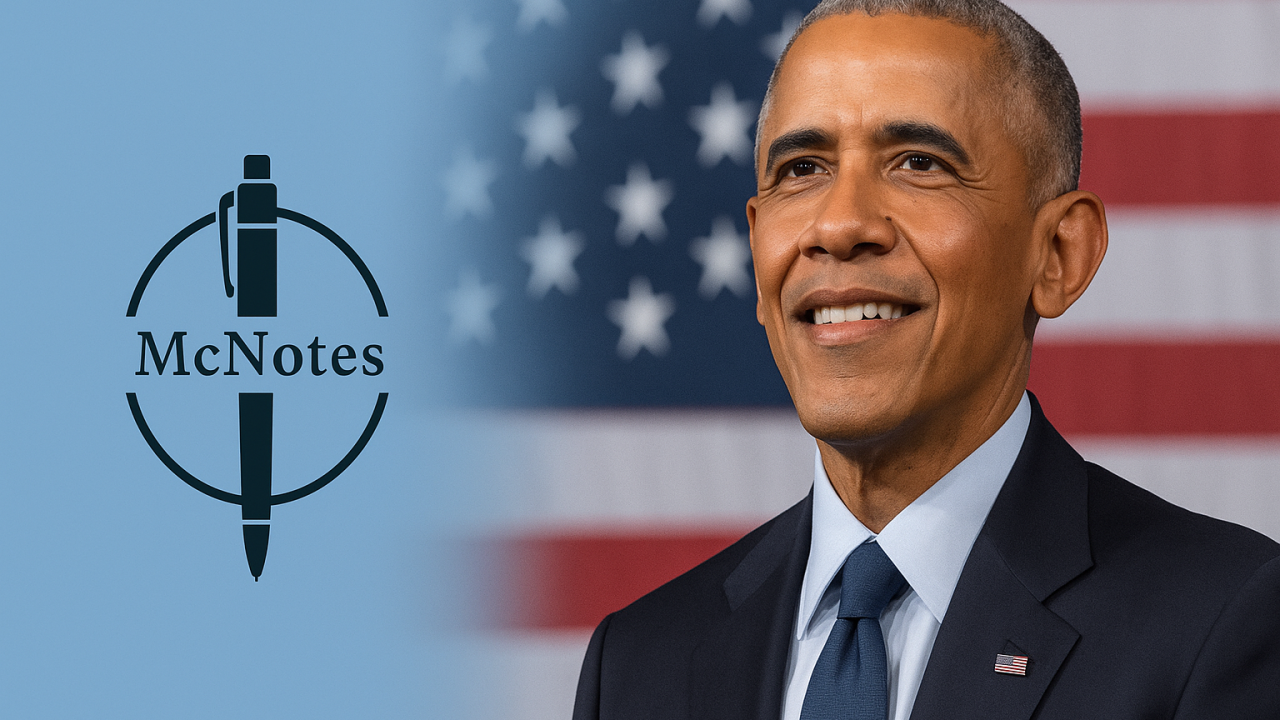
There’s a scene that doesn’t get taught much in schools anymore. Not one of triumph, but of resolve. Picture it: a former president, once the most powerful man in the country, sits in the United States Congress. He is aging, unpopular, and largely alone. Yet day after day, he rises to speak—against slavery, against silence, against the compromise of conscience. That man was John Quincy Adams. And he may offer us a model for what public life after the presidency could, and perhaps should, be.
Today, in the wake of the 2024 elections, the Democratic Party finds itself scattered and disoriented. Republicans now control all three branches of government. Liberals are caught between existential panic and strategic confusion. The loudest voices seem to lack depth. The smartest voices seem sidelined. And the party, once galvanized by generational movements and moral clarity, appears increasingly rudderless.
Into this vacuum, the idea of Barack Obama running for Senate may seem absurd at first—quaint, even. But the more you consider it, the more it begins to make sense.
There is precedent. After his presidency, John Quincy Adams returned to Congress and served for 17 years, becoming a moral pillar in a morally compromised institution. He did not seek power. He sought purpose. He did not believe statesmanship ended at the White House door. He believed the republic still needed defenders.
Obama, now just 63, is still young by Senate standards. He remains the most articulate and widely respected Democratic figure alive. He commands the attention of a fractured nation without needing to shout. And yet, he sits outside the formal structures of power at a moment when those structures are teetering. What if he stepped back in—not as a savior, but as a statesman?
Imagine what it would mean for our politics if a former president chose not the speaker circuit, not foundation galas or corporate boards, but the Senate floor. To take on the drudgery of legislation, the procedural slog, the hard moral labor of standing in a broken chamber and refusing to let cynicism have the final word.
Democrats today do not just need better messaging. They need someone to remind them who they are. Someone who can connect principle to practice, and theory to action. Someone who can model what it looks like to lead not from anger or ambition, but from wisdom.
Obama has always been most compelling when he speaks from that place of clarity—when he reminds Americans that we are bound not just by interests but by ideals. That capacity is sorely missing in the Senate today. And unlike a nonprofit speech or a podcast interview, words spoken on the Senate floor carry procedural weight. They shape the record. They bend the arc.
John Quincy Adams spent his post-presidency battling the gag rule, which sought to erase slavery from the national conversation. His persistence eventually broke it. What are our gag rules today? The soft erasure of truth by outrage. The exhaustion that comes from caring. The creeping belief that democracy is too broken to deserve our effort.
A Barack Obama Senate run wouldn’t fix any of that overnight. But it would send a signal: that dignity still belongs in politics, that depth still matters, and that leadership means showing up, even after you’ve done the highest job.
He wouldn’t need to become Majority Leader. He wouldn’t need to run for president again. He would only need to sit at his desk, open his mouth, and speak the truth with the full weight of his history behind him.
Some might say this is fantasy. But in an age of confusion and collapse, fantasy is often just a neglected form of foresight. We don’t need Obama to come back to save us. We need him to come back to serve—so that others might remember how.