Teeing Up Trust
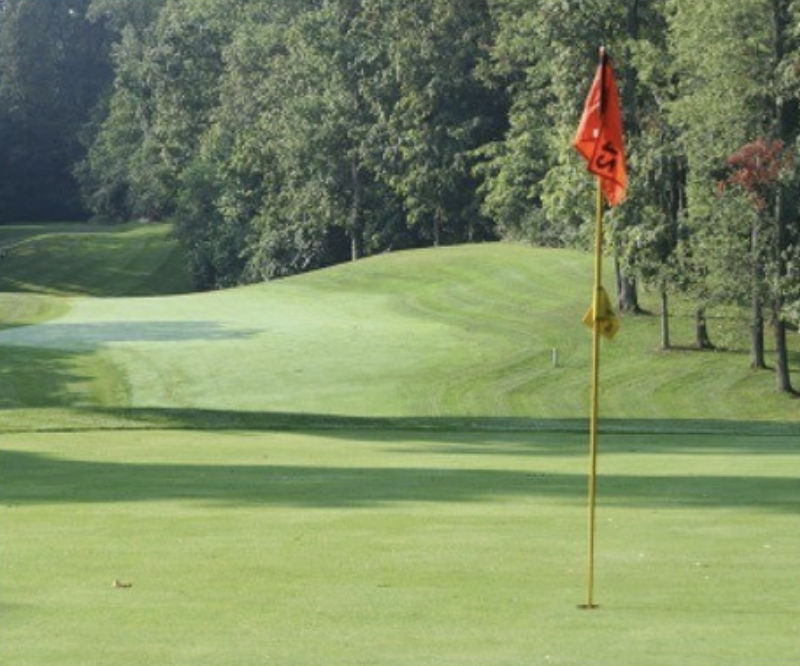
Golf has come under fire in recent years. The environmental footprint of the sport is hard to ignore, especially when you consider that water-intensive, pesticide-heavy courses are still being carved out of desert landscapes. Ironic, considering golfers have long seen sand as the one thing to avoid. And the emergence of the Saudi-funded LIV Golf tour has attached the game to complicated geopolitical realities that make some longtime fans wince.
So yes, maybe it’s worth rethinking whether we need a green oasis in the middle of the Mojave. But we shouldn’t throw the baby out with the water hazard. Golf still matters. And it still reveals more about a person than nearly anything else you can do with them in an afternoon.
If you really want to know someone, walk a round of golf with them. Don’t ride in the cart. Walk it. Eighteen holes. Three and a half, maybe four hours. The game doesn’t ask for your resume. It asks for your rhythm, your reactions, your thought processes, and your patience. And it gets them, whether you want to show them or not.
First, there’s the simple matter of skill. Golf is not about brute force or physical dominance. It’s about touch, strategy, and the ability to quiet the noise in your head long enough to execute something technically precise, over and over again. Someone who has taken the time to become a competent golfer has inevitably cultivated persistence and discipline. It means they’ve failed more times than they can count, and instead of walking away, they came back. That alone tells you something.
Then there’s the mental game. Golf is not chess, but it is chess-like. It forces you to make projections and predictions based on a constantly shifting set of variables. No two rounds are the same, even on the same course. Wind, temperature, humidity, the firmness of the ground, your own physical condition on that particular day—all of it matters. And all of it requires a kind of constant mental recalibration. To play well, you need math skills, spatial awareness, a working memory of your tendencies, and a little creativity. A golfer, whether consciously or not, is thinking three or four steps ahead with every shot. You can see that process unfold in real time.
You also get a front row seat to someone’s relationship with risk. Every shot invites multiple possibilities. Play it safe, lay up, punch out sideways. Or try to thread the needle through a gap in the trees and land it on the green. The course lays out a constant stream of risk-reward decisions, and over the course of 18 holes, you watch someone make those calls again and again. The way they make them matters. Do they protect their score? Do they go for broke? Do they take unnecessary risks and then look surprised when it backfires? That tells you something.
You’ll also learn about someone’s temperament. Golf humbles everyone. At some point in every round, no matter how skilled the golfer, something will go sideways. A bad bounce, a missed putt, a duffed chip. And when it does, you learn whether your playing partner can keep their cool or if they boil over. Do they take it in stride, or does their mood nosedive for the next three holes? Do they laugh at themselves, or do they hurl a club and swear under their breath? Emotional self-regulation, or the lack thereof, does not hide well on the golf course.
Then there’s honesty. Golf is a sport that offers dozens of quiet opportunities to cheat. A better lie here. A mulligan that wasn’t agreed upon. A ball that just happens to be “found” in the rough when it was almost certainly out of bounds. There are no referees, no cameras. Just you and your own conscience. Most people, thankfully, play it straight. But if someone doesn’t, it will show. Eventually. You’ll know.
Golf also has a set of unwritten rules and customs—norms that go beyond the rulebook. Don’t walk through someone’s line on the green. Don’t talk during a backswing. Rake the bunker. Replace your divots. These little acts of etiquette aren’t just about tradition. They’re about respect. They’re about saying, “I see you, I understand the social contract we’re part of, and I care enough to uphold it.” When someone honors those norms, it says something. And when someone disregards them, that says something too.
Then there’s how someone treats the people around them. Golf is competitive, sure. But it’s also collaborative. How generous is someone with advice or encouragement? Do they root for your good shots? Do they keep score accurately and fairly? Do they let the game breathe, or are they looking for an edge at every opportunity? That sense of sportsmanship, that balance of drive and grace, is often where you find out the most about a person.
At this point, golf has become synonymous with business. It’s a cliché, even. The idea that deals get done on the golf course. But I’d argue that’s a little misleading. It’s not that contracts are signed on the back nine. It’s that the round itself becomes part of the vetting process. The game becomes a kind of character interview and, unlike most interviews, this one is not scripted. You don’t get to prep. You just show up, swing your swing, and let the round do its work.
So yes, golf has its flaws. And yes, it’s due for some reckoning in terms of where and how it’s played, and who has access to it. But its ability to unearth something essential about a person? That remains unchanged. If you’re a leader, and you’re lucky enough to have the opportunity to walk a course with someone, take it.
There is no better way to see who someone really is.