Who’s a Good Leader!? You Are!
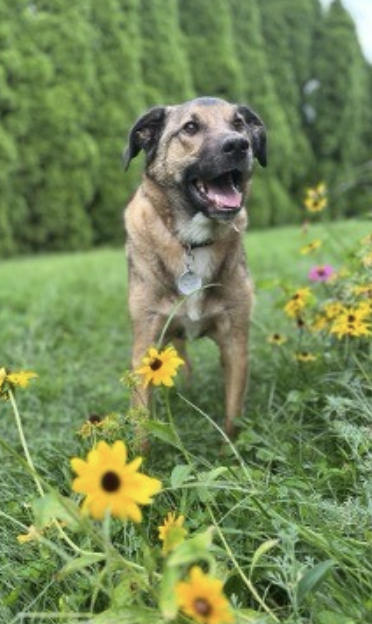
Our dog Datsyuk came from a village in Russia and lives his life like a Cold War defector with an active group chat of conspiracy theories. He is loving, deeply and earnestly loving, but only with his people. With strangers, he is approximately 70 percent suspicion, 20 percent avoidance, and 10 percent chaos. He fears doorbells, unexpected movements, pumpkins, and every single dog that is not him. He sounds his barbaric yawp from the balcony like a furry Walt Whitman with boundary issues, alerting the neighborhood to every mail carrier, stroller, and wind gust that dares pass.
We named him after Pavel Datsyuk, the great Russian hockey player, because it felt right to honor his homeland, and because of his silky smooth hands, strong two-way game, and gentlemanly play. He has a dozen minor medical issues, the running gait of a broken marionette, and the situational awareness of a toddler in roller skates. And yet, somehow, he carries himself with a strange authority. He doesn’t obey commands, he negotiates with them. He is goofy, glitchy, and frequently absurd, but also loyal, protective, and totally sincere. Which is how I realized: dogs, in all their weird, flawed glory, are incredible leaders.
Not in the “build-a-vision-and-scale-an-enterprise” sense. Dogs don’t care about org charts. They’re not trying to disrupt markets. They’re not updating their LinkedIn bios to say “Change Agent.” But they understand something that many leaders do not: people follow energy, not titles. And dogs? Dogs radiate the kind of energy that gets things done, usually with zero meetings and a high snack-to-effort ratio.
Let’s take a closer look at what dogs can teach us about leadership. Because I don’t know if they’re smarter than us, but they’re definitely better at getting people to do what they want without trying all that hard.
Lesson One: Presence Beats PowerPoint
Have you ever tried to have a conversation with someone while they’re “just finishing an email”? Now, have you ever tried talking to a dog? One of those experiences makes you feel like a burden. The other makes you feel like Beyoncé. Dogs don’t multitask. When they look at you, they look at you. It’s unsettling at first. You think, “Why is this creature so obsessed with me?” But then you remember that being deeply seen and unconditionally loved is actually pretty nice.
Presence is what people want from their leaders. Not a 47-slide deck about growth targets. Not a Slack message at 11:42pm labeled “quick thought.” Just show up. Listen. Make eye contact. Be there. If you’re not sure how, spend some time with a dog. Then go act like that. Minus the drooling.
Lesson Two: People Can Smell BS, and So Can Dogs
Dogs have an incredible sense of smell. They know when you’re anxious. They know when you’re lying. They know when the “chicken” in your hand is actually a vitamin wrapped in cheese and betrayal.
Likewise, people can sense inauthenticity in about three seconds. You can say all the right things, paste your values on the wall, even print them on hoodies; but if you’re faking it, your team will sniff it out and respond accordingly by emotionally checking out and possibly stealing your stapler.
Dogs don’t fake anything. If they’re mad, they growl. If they love you, they lick your face aggressively enough to violate several HR codes (don't adopt that one). If they’re tired, they lie down in the middle of the kitchen floor like they’ve been shot. There’s something refreshingly honest about that. As a leader, aim for that level of clarity.
Lesson Three: Celebrate Like You Have No Dignity
Nothing compares to the way a dog greets you at the door. You went to the grocery store? THEY THOUGHT YOU DIED. And now you’re back. You have returned. This is a full-blown spiritual event. Their whole body is involved. If dogs had arms, they’d hug you and never let go.
How often do leaders celebrate their teams like that? “Good job on that huge project. I’ll thank you in a deeply forgettable email that opens with ‘per our last conversation.’” No! Dogs don’t do that. They throw a party. You walked in the door? Fireworks. You filled the food bowl? Knighthood.
People need that. They need to be celebrated, not tolerated. If someone does good work, respond with at least a metaphorical tail wag. Bake a cake. High five. Break into song. Whatever your style, bring some golden retriever energy to your appreciation game.
Lesson Four: Loyalty Goes Both Ways
Dogs are loyal in a way that should be studied by anthropologists and poets. You forget to feed them? They still love you. You make them wear a sweater that says “Mommy’s Little Pumpkin Spice Pup”? They still love you. You step on their paw while making coffee? They immediately forgive you and then follow you into the bathroom to continue loving you.
This is not to suggest your team should tolerate abuse. But it is to say that loyalty in leadership has to be mutual. You can’t expect people to stick by you if you disappear when things get tough, if you throw them under the bus during conflict, or if you consistently act like their value is tied only to their output.
Great leaders stick with their people. They defend them in meetings. They advocate for them. They trust them enough to give real autonomy. If you want loyalty, act like a dog. Not by barking at strangers, but by staying close when it counts.
Lesson Five: Rest Like You Mean It
Dogs rest with the intensity of monks in meditation. They don’t half-nap. They sprawl. They commit. They find the one sliver of sunlight on the floor and become one with it. You could vacuum around them, start a jazz band in the hallway, or open a bag of chips, and they’d still be in REM sleep like they’re training for the Sleep Olympics.
Meanwhile, human leaders are out here scheduling 10-minute “rest breaks” in Outlook and wondering why their cortisol levels are through the roof. Your brain is not a machine. You need rest. Not the kind of rest where you scroll your phone while worrying about your to-do list. Actual rest. Dog-level rest. Shut it all down. Find your metaphorical patch of sun.
Lesson Six: Walks are Sacred, Not Optional
A dog will forgive almost anything, but skipping the walk? That’s a betrayal of the highest order. Walks are not just exercise. They’re ritual. They’re reconnaissance. They are where dogs reconnect with the world and their place in it.
Leaders need walks too. You need space to think. To breathe. To be bored enough to have a real idea again. You need to step away from the laptop and into the actual world, where humans live and things smell like more than coffee and anxiety. You don’t have to literally walk if that’s not your thing. But do something that gets you out of reactive mode. Do it like your emotional health depends on it, because it does.
Why Dogs Might Be Better Than Us
Dogs are ridiculous. They eat socks. They panic over vacuum cleaners. They think they can protect you from thunder with sheer willpower. But they’re also noble in a way we rarely are. They’re emotionally honest. Fiercely loyal. Endlessly forgiving. And somehow, they lead entire families without ever using a single word.
So let’s stop trying to reinvent leadership every year with a new corporate buzzword. Let’s just admit that dogs already have most of it figured out. Be present. Be real. Celebrate your people. Protect your team. Rest when you need to. Go for a walk. And if someone messes up, forgive them quickly and go back to being their biggest fan.
Lead like a dog. Be a good boy. People will follow you.