You Were Foreigners in Egypt
Recently, I opened a meeting with a short devotion meant to center us. In moments of leadership, especially within Christian education, I find it helpful to begin by remembering who we are called to be. I share that reflection here, in hopes that it offers you the same grounding it offered us during these troubled, and troubling, days.
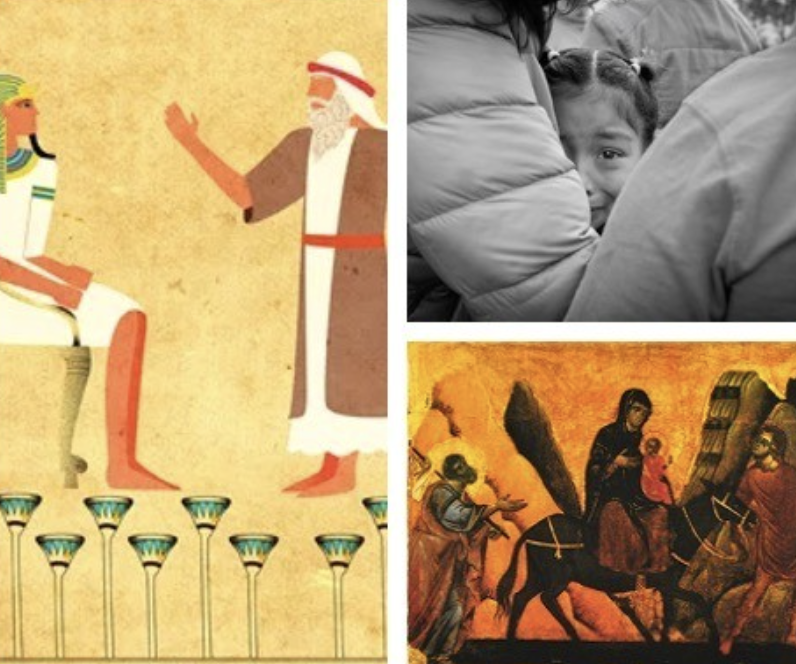
As we begin our meeting this morning, I want to ground us in Scripture and in the spirit of reflection. Leadership in a Christian school is not only an administrative task, it is also a spiritual calling, one that requires us to be attuned to the movement of God in the world and in our own hearts.
In John 4:4–26, Jesus famously meets a Samaritan woman at a well. It is noon, the hottest part of the day. She is alone, likely because the other women in town have pushed her to the margins. She is a foreigner in the eyes of the Jews and a scandal in the eyes of her neighbors. And yet, Jesus sees her. He speaks to her with dignity. He asks for water, and then He offers living water in return:
“Everyone who drinks this water will be thirsty again, but whoever drinks the water I give them will never thirst.” (John 4:13–14)
And later:
“I, the one speaking to you, I am he.” (John 4:26)
It is a moment that disrupts all expectations. A Jewish rabbi engages a Samaritan woman. A man known for miracles chooses to linger in ordinary conversation. A woman considered unclean becomes the first evangelist in the Gospel of John, running back to her village to say:
“Come, see a man who told me everything I ever did. Could this be the Messiah?” (John 4:29)
This story matters because it reminds us that God does not overlook the outsider. In fact, the arc of Scripture bends repeatedly toward the displaced, the wandering, and the foreigner. Of course, Jesus Himself was once a refugee. After His birth, Joseph was warned in a dream to flee with Mary and Jesus to Egypt to escape the violent decree of Herod:
“So he got up, took the child and his mother during the night and left for Egypt, where he stayed until the death of Herod.” (Matthew 2:14–15)
This moment, too, echoes the longer biblical story of exile and migration. The people of Israel were told:
“You are to love those who are foreigners, for you yourselves were foreigners in Egypt.” (Deuteronomy 10:19)
And earlier in that same passage:
“He defends the cause of the fatherless and the widow, and loves the foreigner residing among you, giving them food and clothing.” (Deuteronomy 10:18)
In our own time, we are witnessing growing uncertainty around those who live in the in-between, those caught between nations, between policies, between belonging and exclusion. As Christians, we are called to remember that many of our ancestors in faith lived in such spaces. And that it was often in those places that God met them.
At our school, we serve children whose families may not have crossed physical borders, though some have, but who often navigate the invisible borders of race, class, language, and trauma. They carry stories that are still being written. Our role is not only to teach them, but to receive them, to see them, and to help them see themselves as God sees them, beloved, capable, and full of promise.
When Jesus met the woman at the well, He crossed cultural, political, and religious boundaries to show what the love of God looks like in practice. As school leaders, we are called to do the same. To lead with compassion. To remain sensitive to the human stories unfolding quietly in the lives of those we serve. And to remember that in welcoming the outsider, we often encounter Christ Himself.