Book Recommendations: Q2 2025
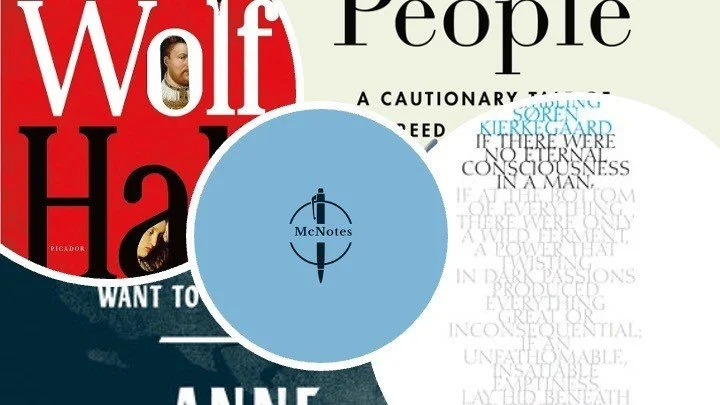
At the close of the second quarter, I want to share four books that left a lasting impression on me this spring. These selections span centuries and continents, but each speaks to enduring questions of belief, leadership, and institutional power. Whether you are working in a classroom, leading a team, or simply seeking to make sense of the moment we’re living through, these works offer insight and challenge in equal measure. For those interested in tracking my ongoing reading journey, you can find me on Goodreads.
1. Fear and Trembling by Søren Kierkegaard
This is not an easy read, but it is a necessary one. Kierkegaard’s reflection on the biblical story of Abraham and Isaac is a profound exploration of what it means to truly have faith. He does not offer comfort or clarity. Instead, he asks readers to grapple with the paradoxes at the heart of religious conviction. What does it mean to obey a divine command that defies ethical norms? How do we trust in something that cannot be rationally explained? For anyone working in Christian education or wrestling with questions of moral responsibility, this book invites a deeper kind of introspection. It reminds us that faith often begins where certainty ends.
2. Wolf Hall by Hilary Mantel
Mantel’s portrait of Thomas Cromwell is unlike any historical fiction I have read before. The writing is intimate and richly textured, drawing the reader into the mind of a man who rises from the margins of society to the center of political power. What makes this novel especially resonant for leaders is its attention to the subtle ways power operates—not only through policy and law, but through conversation, memory, and perception. Cromwell is ambitious, but also capable of empathy. He moves through a volatile court with both caution and cunning. Mantel does not reduce him to hero or villain. Instead, she paints a portrait of a man who understands how institutions bend and shift under pressure.
3. Careless People: A Cautionary Tale of Power, Greed, and Lost Idealism by Sarah Wynn-Williams
This memoir takes readers into the inner workings of Facebook during a time when it was rapidly becoming one of the most influential forces on the planet. Wynn-Williams reflects on her time there with honesty and depth, charting her journey from hopeful employee to disillusioned observer. The book is not simply about one company’s mistakes. It is about how good intentions can be swallowed by scale, speed, and corporate ambition. For educators shaping conversations around digital citizenship and ethical technology use, this account offers a valuable case study. It also prompts a more personal question: How do we stay aligned with our values when working within systems that reward something else?
4. Autocracy, Inc. by Anne Applebaum
Applebaum turns her attention to the new face of authoritarianism, and what she reveals is both complex and urgent. Today’s autocracies do not rely on a single strongman at the top. Instead, they function through sprawling networks of influence—financial, technological, and political—that operate across national boundaries. This book makes the case that these systems do not need to agree on ideology to cooperate. They share a common goal of weakening democratic norms and sowing distrust. For anyone involved in education, the implications are clear. Schools are one of the few places where civic values are taught and lived. If we want to preserve democratic life, we need to understand the forces that are working, quietly and persistently, to erode it.