Back to Basics: Leading with the 80/20 Rule
Private school leaders often find themselves overwhelmed, not because they are unwilling to work hard, but because the sheer volume of responsibilities makes it difficult to determine where their efforts are most effective. With roles that stretch from instructional leader to fundraiser, from facilities manager to pastoral guide, heads of school face a constant stream of decisions, crises, and commitments. In this environment, productivity becomes less about effort and more about focus.
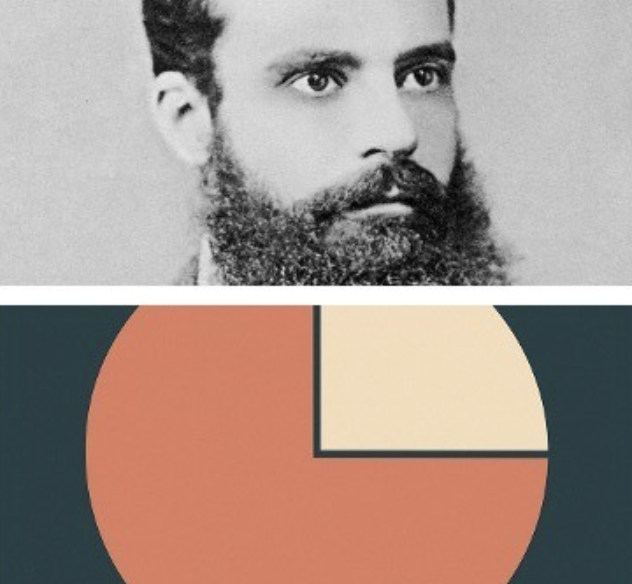
One of the most useful tools a leader can adopt to regain clarity is the Pareto Principle, often referred to as the 80/20 Rule. This principle suggests that a small portion of our actions tends to account for a large portion of our outcomes. First observed in the realm of economics by Vilfredo Pareto, who noted that 80 percent of land in Italy was owned by 20 percent of the population, the concept has since proven applicable across countless fields, including education.
In the life of a school, this pattern is easy to observe. A handful of students are responsible for most behavioral incidents. A small group of families contribute the majority of donations. Most inquiries come from just a few reliable admissions channels. And often, a limited set of faculty voices shape the broader school culture. Recognizing these patterns can help leaders focus their attention where it truly counts.
The challenge, of course, is that schools are noisy places. The 80 percent of tasks that produce only marginal returns often demand the most attention. These are the emails that flood your inbox, the meetings that feel necessary but lack purpose, and the day-to-day tasks that fill the calendar without advancing your mission. These activities can wear down even the most dedicated leader, not because they are unimportant, but because they consume time and energy that could be better spent elsewhere.
Leadership, at its core, is about discernment. The most effective heads are not those who manage to touch every task or attend every meeting. They are those who understand what only they can do, and who structure their time accordingly. This might mean setting aside uninterrupted hours for strategic planning, focusing on mentoring a few high-potential teachers, or prioritizing conversations with key donors and board members. These efforts, though less visible in the moment, often produce far more lasting impact than trying to keep pace with every operational detail.
One practice that can help shift your perspective is to review your calendar at the end of each week and ask a few simple questions. Where did you see meaningful results? What activities felt aligned with your core purpose? What could have been delegated or eliminated entirely? Over time, these reflections can help you build a schedule that supports leadership, not just management.
There is also a cultural opportunity here. When you model focus and intentionality, you give your team permission to do the same. A teacher who recognizes that a few classroom routines drive most of their student engagement can lean into those areas and refine them. An administrator who sees that certain questions come up repeatedly might invest in clearer communication or better systems. When everyone is thinking about impact rather than activity, the entire organization becomes more aligned and more effective.
Of course, applying the 80/20 Rule requires more than just identifying what works. It requires the courage to let go of what does not. Schools are filled with traditions, routines, and habits that persist out of momentum rather than purpose. Committee meetings continue even when their goals are unclear. Reports are written because they always have been. By periodically questioning whether these efforts are still serving the mission, leaders can free up time and resources for what truly matters.
There is a deeper irony here. Often, the very tasks that feel optional—vision casting, strategic planning, team development—are the ones that reduce emergencies over time. When leaders invest in the future, they tend to spend less time reacting to the present. But because these tasks are not urgent, they are the first to be postponed. The result is a cycle of constant reactivity, in which the long-term work of leadership is endlessly deferred in favor of putting out fires.
Breaking that cycle begins with clarity. Not every problem needs your involvement. Not every decision requires your approval. The most effective use of your time will always be in the spaces where your presence produces exponential returns. That might mean choosing a single meeting to attend this week because you know your contribution will move the conversation forward. It might mean saying no to a task that someone else is fully capable of handling. It might even mean protecting time on your calendar for reading, thinking, or walking the campus, because some of your best leadership insights will not come during a meeting.
The 80/20 Rule is not a rigid formula. It is a mindset shift. It asks you to pause, to notice where your leadership is actually making a difference, and to protect that space at all costs. It does not demand perfection. It simply asks that you pay attention to where the real momentum lives.
If you are feeling overwhelmed this month, try this: take stock of your last five days. Identify the moments that generated movement—whether it was a breakthrough conversation, a decision that clarified a path forward, or a piece of feedback that lifted someone’s performance. Those moments are your 20 percent. They are the core of your leadership. Everything else should be organized around making more of them possible.